
Training the body’s immune system to fight cancer has revolutionized personalized medicine.
One approach—CAR-T therapy—takes a patient’s own T-cells, genetically modifies them outside the body, and returns them to attack cancer. It has proven transformative against aggressive lymphomas and leukemias. Yet major challenges remain: before reaching a tumor, CAR-T cells must survive a hostile microenvironment packed with molecules that weaken or shut them down. Sometimes the cells simply cannot persist long enough to eradicate the cancer.
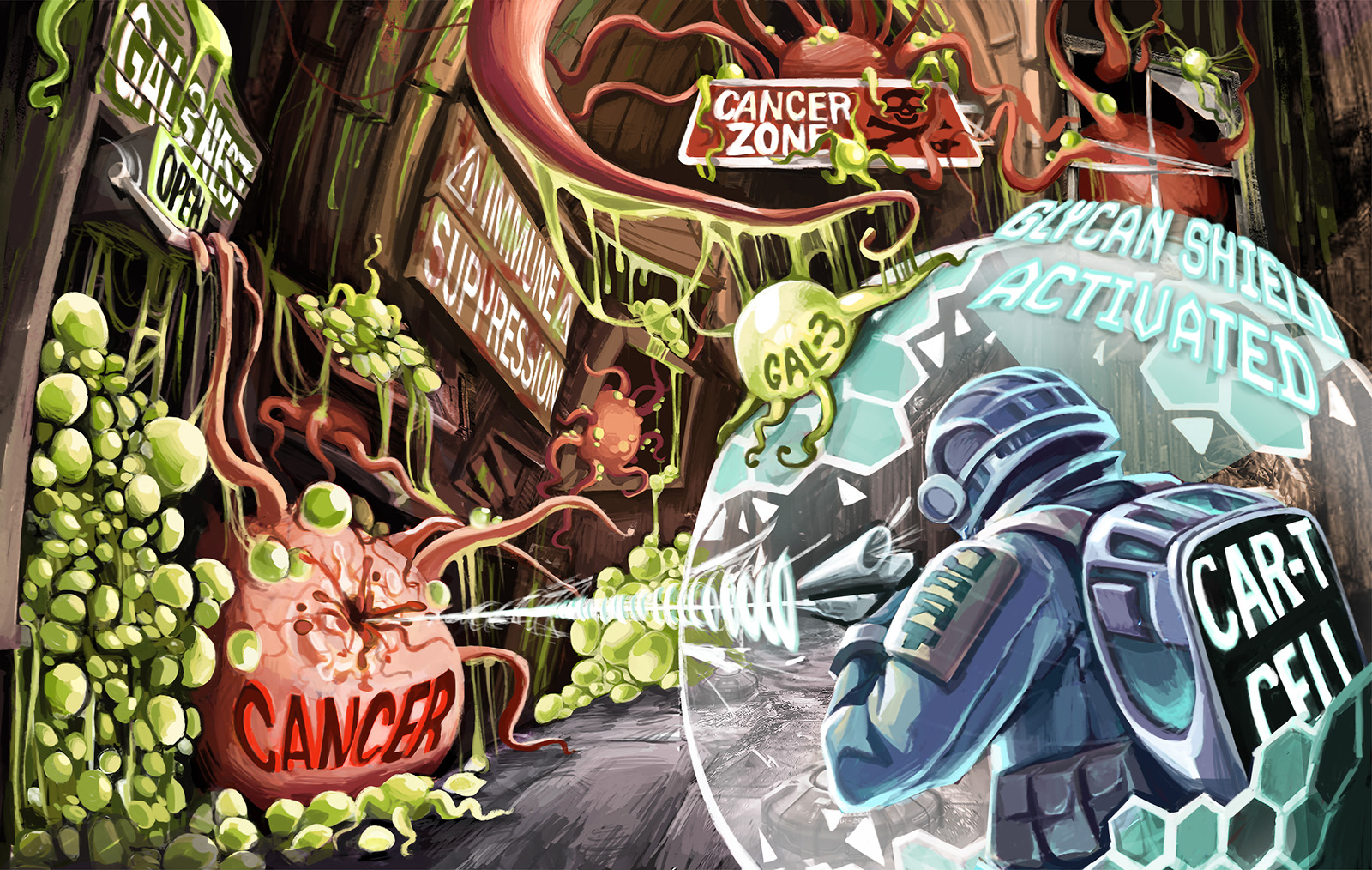
Researchers at FIU Medicine have found a way to help CAR-T cells circumvent these defenses. Using glycoengineering, the team designed a surface “shield” for the cells that makes them more resilient. In a preclinical study published in Frontiers in Immunology, these next-generation cells roughly doubled the number still thriving and attacking cancer compared with standard CAR-T therapy.
“With our approach, we were able to roughly double the number of CAR-T cells that were still thriving and continued attacking the cancer in our lab experiments,” said Charles Dimitroff, the study’s author and professor in the Department of Cellular and Molecular Medicine.
The team first identified the culprit. Analyzing blood from 62 people—31 with diffuse large B-cell lymphoma and 31 healthy controls—they found elevated levels of the immune-suppressing protein galectin-3 in cancer patients. “This protein is a problem because it gums up the ability of immune cells to do their anti-tumor function,” Dimitroff explained.
All cells are coated with sugars called glycans. Dimitroff’s lab spent more than five years mapping these patterns on CAR-T cells, then rearranged them through glycoengineering so galectin-3 can no longer latch on. In mouse models of B-cell lymphoma, the shielded cells persisted longer, showed stronger activity, and shrank tumors more effectively than standard CAR-T cells.
“What makes this especially meaningful is we’re not fundamentally changing CAR-T cell therapy itself, but rather upgrading each cell’s own resilience by modifying its sugar surface,” said Lee Seng Lau, a postdoctoral scientist who helped lead the study.
Because many cancers produce similar immune-suppressing molecules, the approach could extend to solid tumors, which account for about 90 percent of adult cases and have been harder to treat with current CAR-T methods. Dimitroff’s lab continues refining the upgraded cells for other hard-to-treat cancers.