
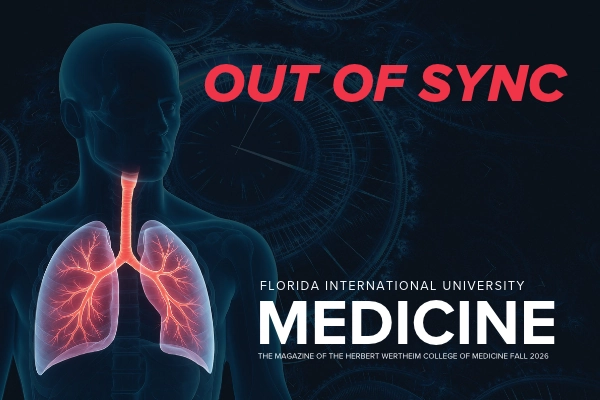
People living with HIV face a greater risk of developing lung diseases such as emphysema and chronic obstructive pulmonary disease (COPD) at a much younger age—even if they have never smoked.
While clinicians have long noted disrupted sleep patterns in people with HIV, FIU researchers have now delivered the first report detailing the molecular mechanism of HIV-associated circadian disruption specifically in the lung. In a study published in Communications Biology, the team showed that the HIV protein Tat interferes with the lungs’ internal molecular “clock”—the timekeeping system that governs daily lung function and immune responses. This disruption unleashes inflammation that damages airway tissue and sets the stage for disease.
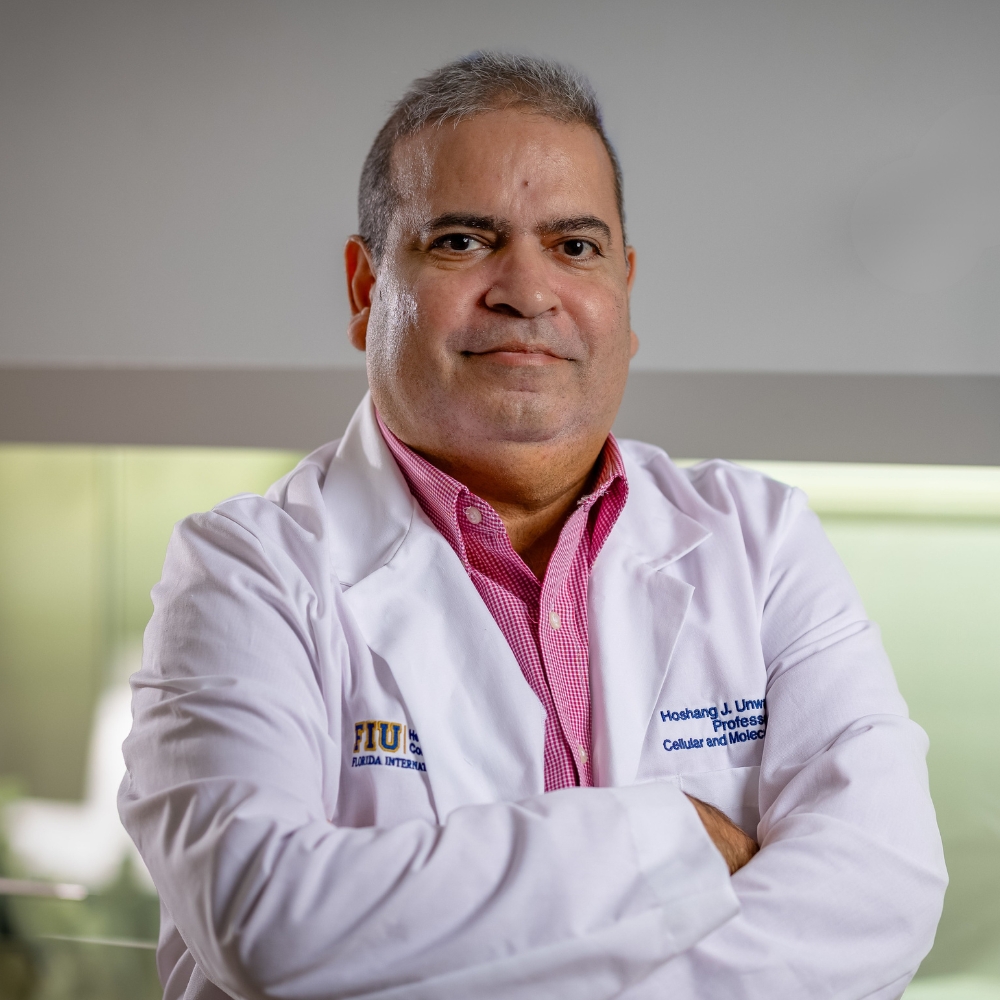
“This is the first study to show HIV is interfering with this important system,” said lead author Hoshang Unwalla, professor of cellular and molecular medicine at FIU Medicine. “It opens the door for new ways to potentially slow or prevent disease development.”
Unwalla’s lab previously showed that HIV can infect airway cells and form persistent reservoirs that continue producing harmful proteins such as Tat despite antiretroviral therapy. Using lung samples from people with HIV, lab-grown lung cells and a mouse model that produces Tat only in the lungs, the researchers found that Tat elevates a small regulatory molecule. This molecule suppresses SIRT1, a protein essential for keeping the lung clock running, resulting in higher levels of inflammatory molecules. In the mice, early signs of emphysema appeared by about four months of age—roughly equivalent to early adulthood in humans.

Kingshuk Panda, Ph.D. ’26, who contributed key work as a doctoral candidate in Unwalla’s lab, tested a potential fix. “When we treated the cells with the SIRT1 activator, we were able to reduce inflammatory molecules,” Panda said. “This suggests that if we can target this pathway, we may be able to improve outcomes.”
Resetting the clock. Reducing inflammation. Reimaging HIV care.
Supported by Unwalla’s NIH R01 grant “Resetting the Clock in HIV-Associated COPD,” the research also advances efforts to silence HIV reservoirs with a patented CRISPR-based approach. By stopping infected cells from producing damaging proteins like Tat, researchers hope to reduce complications such as COPD and improve quality of life for people living with HIV.