
Glioblastoma remains the most aggressive and lethal brain cancer. Most patients survive only a year after diagnosis; just 5 percent reach five years. Standard treatment—surgery followed by radiation and chemotherapy—has changed little for decades. Now a promising national Phase II trial is testing whether smarter delivery of higher radiation doses can shift those odds without crushing the body’s own defenses.
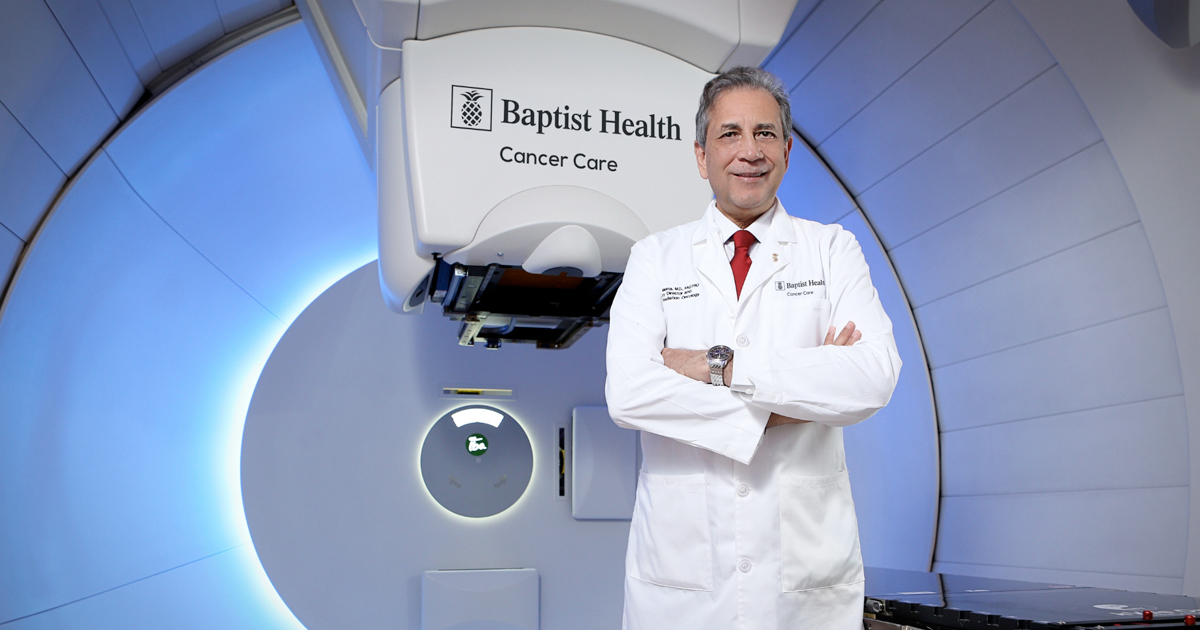
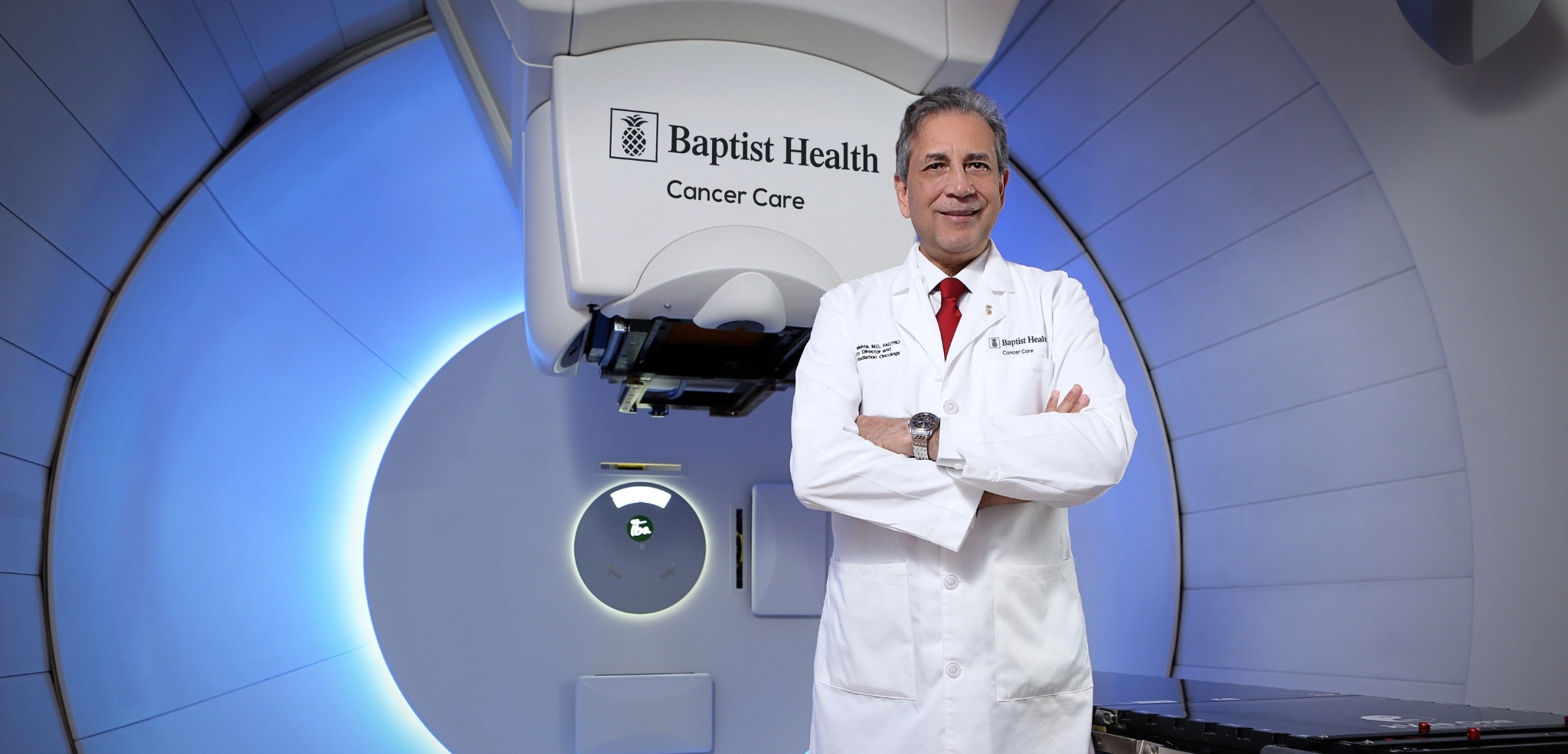
Dr. Minesh P. Mehta, a nationally recognized radiation oncologist and neuro-oncologist, led the trial. The study asked two questions: Does escalating radiation dose improve survival in newly diagnosed glioblastoma? And does the type of radiation matter?
Conventional photon (X-ray) radiation deposits doses on the way into the tumor and continues past it, affecting surrounding healthy tissue. Proton therapy, by contrast, deposits most of its energy at a precise depth—the Bragg peak—and stops. The result is far less “exit dose” and a smaller volume of normal brain irradiated.
During the trial, patients were randomized to standard-dose radiation or dose-escalated treatment, with parallel photon and proton cohorts. Dose escalation with photons showed no survival benefit. Dose escalation with protons did.
Patients receiving higher-dose proton therapy experienced a 6.8 percent improvement in survival at two years and a 4.6 percent improvement at three years, corresponding to a roughly 19 percent reduction in the risk of death during the study period.
Critically, the higher proton dose did not increase overall treatment-related side effects. In fact, rates of lymphopenia—the drop in infection-fighting and cancer-surveillance white blood cells that are sensitive to radiation—were lower with protons.
“These findings are encouraging, not only because they show a potential survival benefit, but because they underscore that we can improve outcomes without compromising quality of life,” said Mehta, who is chair of FIU Medicine’s oncological sciences and chief of radiation oncology and deputy director at Baptist Health Herbert Wertheim Miami Cancer Institute. “That is the future we are working toward.”
The lymphocyte-sparing effect is more than a laboratory curiosity. Circulating lymphocytes help the immune system recognize and attack tumor cells. By irradiating less normal tissue, protons leave more of these cells intact, potentially allowing the body to contribute to its own defense.
Alonso Gutierrez, chief of medical physics at Herbert Wertheim Cancer Institute, collaborates closely with Mehta’s team. He describes the physical advantage simply.
“Protons are almost like a missile. They go into the body and, where their energy stops, they deposit a large amount of energy known as the Bragg peak,” he said. “By carefully selecting the beams, we can make sure those peaks stay inside the tumor and not in the healthy tissue around it."
Real-world implications extend further. Early signals suggest the lymphocyte benefit may be stronger in women. Lower doses to critical structures such as the hippocampus could also help preserve memory and cognition. And patients may experience less fatigue and better tolerate the full course of care. The trial is now moving toward Phase III to confirm whether this approach can become a new standard for glioblastoma treatment.
For patients, the difference is measured in ordinary days reclaimed. Judi Califano was diagnosed with glioblastoma in 2023 following a seizure. After surgery, she came under Mehta’s care at Baptist Health and enrolled in the trial. She completed radiation and chemotherapy; subsequent scans have remained clear. Califano has since returned to running half-marathons and says she feels stronger than many expected.
“Instead of crossing the finish line,” she said, “I felt like I was starting at the start line for the rest of my life. I have regained my health. I eat and take care of myself much better than I did even before.” Califano said the support she received throughout the trial was as important as the treatment. “I feel very, very blessed,” she added. “The people [running the trial] have been amazing…so encouraging.”
This work sits at the intersection of clinical research and technology. Baptist Health’s proton center, the largest in South Florida, and its partnership with FIU Medicine aim to refine targeting, personalize treatment intensity and design more efficient trials.
No single advance will conquer glioblastoma overnight. Yet preliminary results from this clinical trial offer a concrete path forward. For a disease long defined by limited options, that path is measured in both years of life and the quality of those years.