
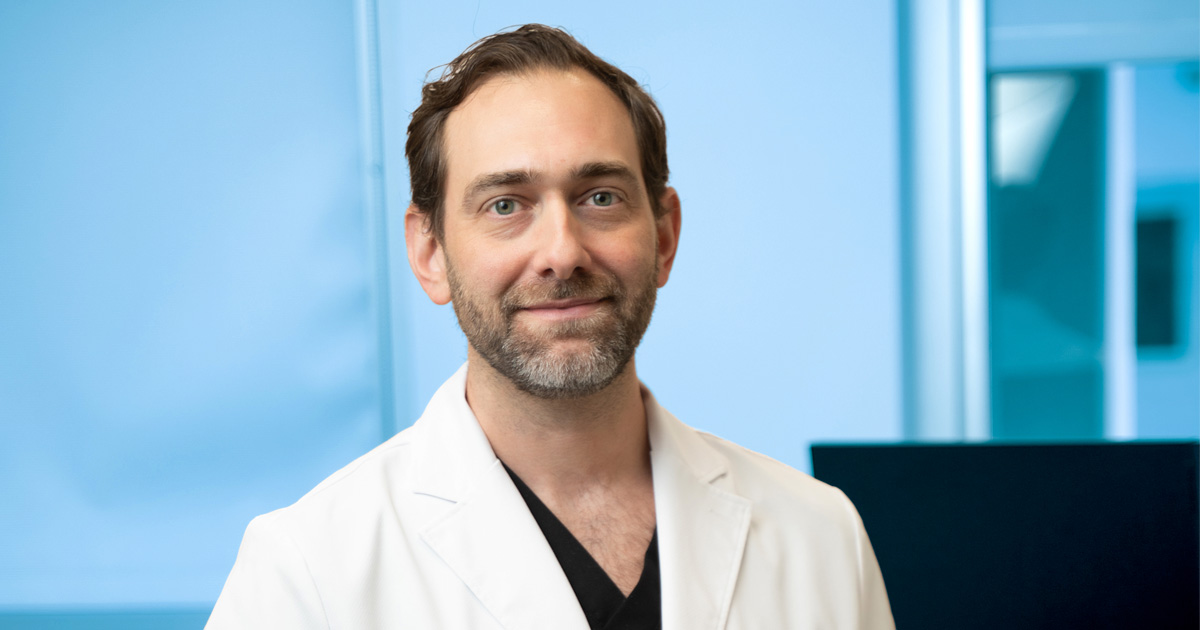
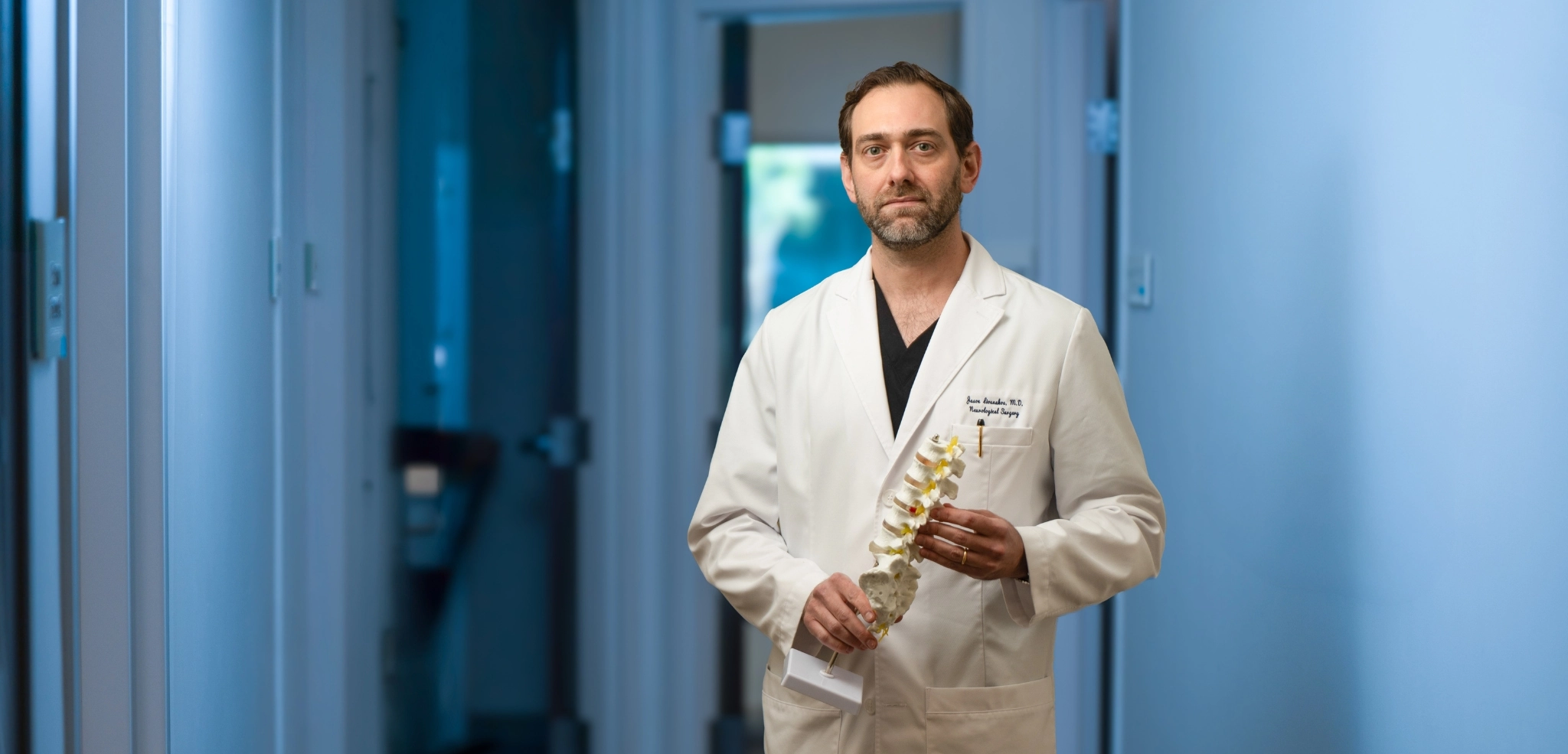
In neurosurgery, seconds can make the difference between function and paralysis. The field demands mastery of critical care, radiology, surgery and neurology all at once—challenges Dr. Jason Liounakos ’15 was eager to take on as FIU Medicine’s first practicing neurosurgeon.
Liounakos, now a spine surgeon and director of outpatient spine surgery at Baptist Health Miami Neuroscience Institute, grew up in Tampa and earned a master’s degree at Georgetown before choosing FIU medical school for its community focus. He graduated first in his class, received the Florida Board of Medicine Chairman’s Recognition Award and became the first Panther to complete a neurosurgery residency and enter practice.
Liounakos was first introduced to the field during medical school by mentors at Baptist Health, including Dr. Sergio Gonzalez-Arias, the now-retired founding chair of neuroscience at FIU Medicine. During his residency at Jackson Memorial Hospital, Liounakos earned the highest neurosurgery primary board exam score in the program’s history, and at graduation, received the Sanjiv Bhatia, M.D. Distinction in Leadership and Service Award and the Best Resident Teacher Award.
“I wanted to come back to Baptist and FIU and give back a bit to the organizations that gave me so much,” he says. Today, he does just that—practicing at Baptist Health while also mentoring medical students as a clinical assistant professor and preceptor at the College of Medicine. “So, when I was given the opportunity to sign on with Baptist, I really didn’t have to think about it. It was a no-brainer for me.” Liounakos specializes in complex and minimally invasive spine surgery, from quick microdiscectomies for sciatica to hours-long scoliosis corrections. He embraces computerized navigation and robotics to improve precision and safety when placing spinal instrumentation.
As lead author on one of the largest case studies evaluating navigation-assisted surgeries, he helped demonstrate that these technologies can significantly reduce risks of neurologic or vascular injury.
Beyond the data and technology, what he finds most rewarding are the patient stories of recovery.
“Neurosurgeons take great ownership over their patients,” Liounakos says. “You have to, because many of them are very ill.”
Recently, an elderly woman with undiagnosed cervical stenosis tripped at home, suffering a catastrophic spinal cord injury that left her quadriplegic within seconds. Liounakos had the difficult job of helping her understand the severity of her condition—but just three months later, after emergency decompression and rehabilitation, she was walking.
Now 39 and father to two young sons, Liounakos serves the South Florida community that shaped him. He credits his wife and supportive parents—he was the first in his family to attend college—for helping him through the demanding training.
“It makes me feel really good about the work you can do and the impact you can have on somebody,”
— Jason Liounakos